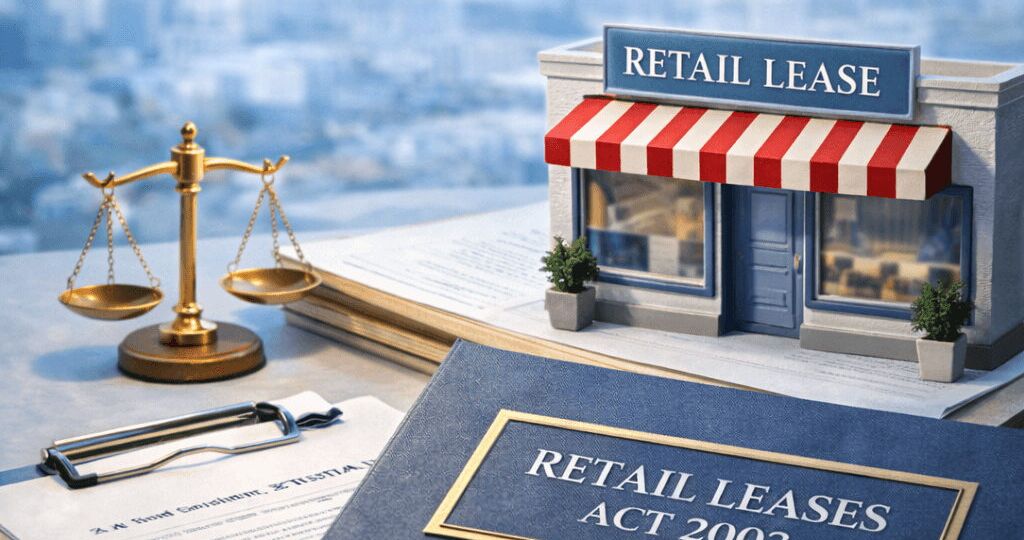
If you are renting a retail shop in Victoria, the law gives you a set of important protections that do not apply to other types of commercial leases. The Retail Leases Act 2003 (Vic) sets out the rules that govern most retail leases in the state. Knowing your rights before you sign can save you significant time, money, and stress down the track.
Does the Retail Leases Act Apply to Your Lease?
The Act generally applies to premises used wholly or mainly to sell or hire goods, or provide services, to the public. It does not apply where the rent and outgoings exceed $1 million a year (excluding GST), or where the tenant is a listed company or its subsidiary. This includes most shops in shopping centres as well as many standalone retail premises.
If you are unsure whether your lease falls under the Act, it is worth checking with a solicitor before you sign anything.
The Landlord Must Give You a Disclosure Statement
Before you sign a retail lease, your landlord is required by law to provide you with a disclosure statement at least 14 days in advance. This document sets out key information about the lease, including rent, outgoings, permitted use, and the term of the lease.
If the landlord fails to provide a proper disclosure statement, you may have the right to end the lease early in certain circumstances.
Minimum Five-Year Lease Term
Under the Act, most retail leases must be for a minimum total term of five years, including any options to renew. This protection exists to give tenants reasonable security of tenure so that investment in fit-out and goodwill is not wasted.
You can agree to a shorter term only by obtaining a five-year waiver certificate from the Victorian Small Business Commission and giving it to the landlord before the lease is signed. This is not something to do without careful consideration.
How Rent Reviews Are Regulated
The Act limits the types of rent review mechanisms a landlord can use. Permitted methods include CPI adjustments, fixed percentage increases, and market reviews. Ratchet clauses, which would prevent rent from ever going down on a market review, are not permitted under Victorian law.
Limits on What the Landlord Can Recover from You
A landlord cannot recover from you as outgoings any costs that are not permitted under the Act. For example, capital costs, land tax and the costs of rectifying structural defects are generally not recoverable. The disclosure statement must specify exactly which outgoings the landlord intends to recover.
Resolving Retail Lease Disputes
If a dispute arises under a retail lease in Victoria, it is generally referred to the Victorian Civil and Administrative Tribunal (VCAT). VCAT can hear disputes about rent, outgoings, access, fit-out obligations, and lease renewal, among other things.
Before VCAT will hear a retail lease dispute, the parties must generally try mediation through the Victorian Small Business Commission, and many disputes are resolved there, which can save both parties time and legal costs.
Talk to a Commercial Leasing Solicitor
Whether you are negotiating a new retail lease or dealing with a dispute with your landlord, getting the right advice early makes a real difference. Contact Professional Edge Lawyers to speak with a commercial leasing solicitor who understands the Retail Leases Act 2003 and can help you protect your position.
Need advice on a specific lease? See our commercial leasing lawyers in Frankston page for how we act for landlords and tenants, or call 1800 776 529.
Need Legal Advice?
Practical advice from our Frankston office for clients across Melbourne and the Mornington Peninsula, in English or in Polish.
BOOK A CONSULTATION1800 776 529
Related Insights
Fairer Payments on Jobsites: What Victoria's 2025 Reforms Mean for Subcontractors