
Practice Areas / Litigation & Disputes
Litigation & Dispute Lawyers
Civil and commercial disputes in the Victorian courts and VCAT, for individuals and businesses across Melbourne, Frankston and the Mornington Peninsula. Advice in English and in Polish.
When a dispute needs resolving
Most disputes begin with something ordinary: an unpaid account, a contract that was not performed, a falling-out between business partners or a disagreement over property. Some settle after a well-judged letter. Others need a court or tribunal to decide them, and some need urgent orders before a hearing is possible.
We act for individuals and businesses bringing claims and for those defending them, from the first letter to a final hearing. Radek Dajer handles each matter personally, gives you a frank view of the merits, costs and risks, and can explain every step in Polish.
How we help with litigation and disputes
Courts, VCAT and arbitration
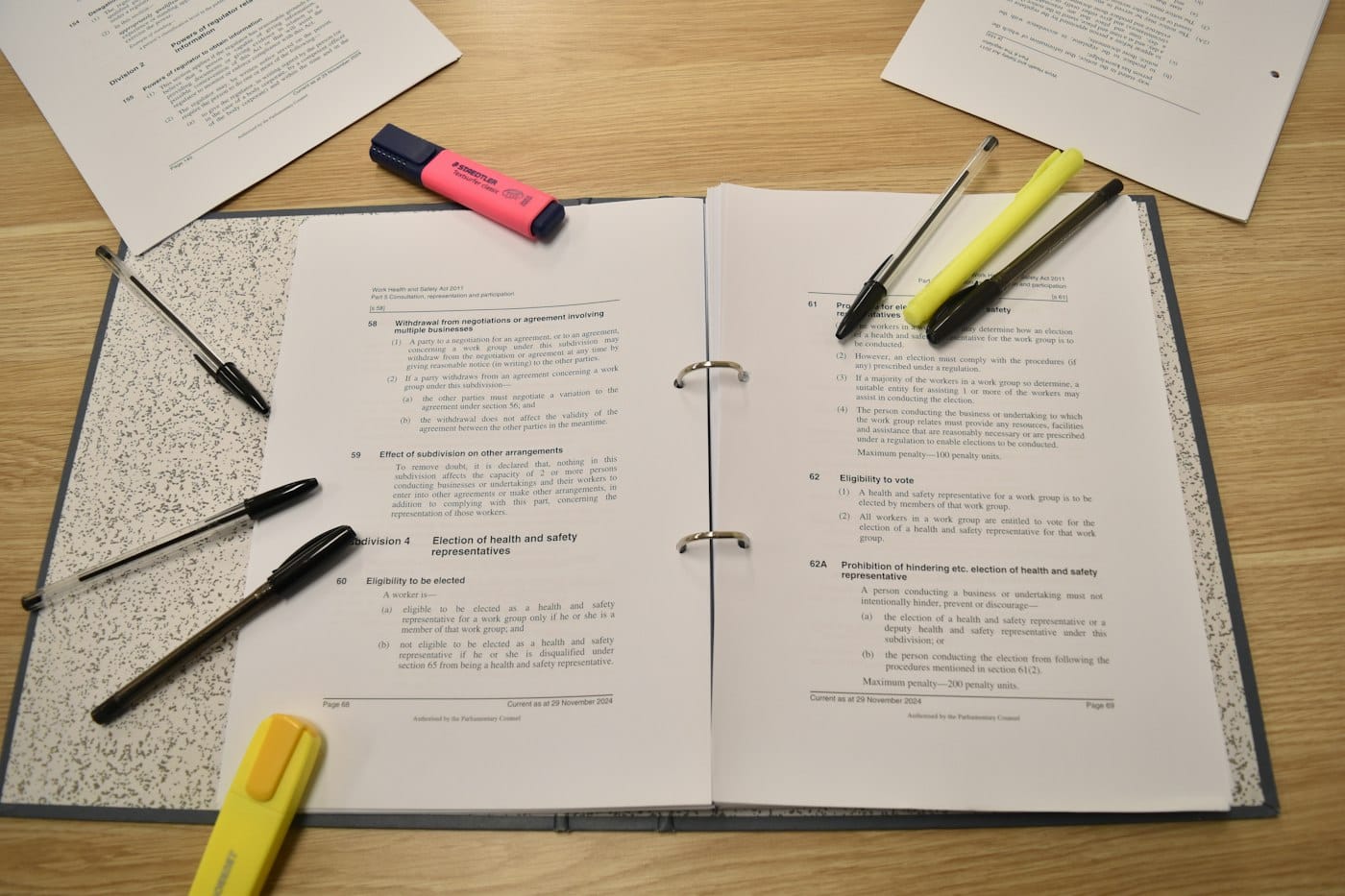
Where a dispute is heard depends on the amount at stake, the type of claim and sometimes your contract. We act in contract disputes, claims for money owed, property and caveat disputes, and disputes between business partners and shareholders, including oppression claims under the Corporations Act 2001 (Cth).
- Magistrates’ Court of Victoria: claims up to $100,000, or more if the parties agree in writing. Defended claims under $10,000 are generally referred to arbitration, a less formal hearing.
- County Court of Victoria: civil claims of any amount, including commercial and building disputes.
- Supreme Court of Victoria: also unlimited. It hears complex commercial and corporate disputes, many urgent applications, and appeals on questions of law from the Magistrates’ Court and VCAT.
- VCAT: the Victorian Civil and Administrative Tribunal hears particular kinds of dispute, including goods and services, domestic building, owners corporation and commercial lease disputes. Each party generally pays its own legal costs.
- Arbitration: if your contract requires it, an arbitrator decides the dispute privately under the Commercial Arbitration Act 2011 (Vic), and the award can be enforced through the courts.
Before and during a case
No general rule in Victoria sets out steps you must take before filing a claim: the pre-litigation requirements originally in the Civil Procedure Act 2010 (Vic) were repealed in 2011. Courts still expect an attempt to settle, and once a proceeding starts in the Magistrates’, County or Supreme Court, the Act’s overarching obligations apply.
- Overarching obligations: parties and their lawyers must act honestly, have a proper basis for each claim and response, cooperate, not mislead, use reasonable endeavours to settle, narrow the issues, keep costs proportionate, avoid delay and disclose critical documents.
- Certification: each party certifies that it understands these obligations, and its lawyer certifies that its claims or responses have a proper basis.
- Compulsory first steps: retail lease disputes must generally go to the Victorian Small Business Commission before VCAT, domestic building disputes usually go through the Building and Plumbing Commission’s dispute resolution service first, and a defamation claim needs a concerns notice.
- Mediation: courts can order mediation or other appropriate dispute resolution, and VCAT often lists disputes for mediation or a compulsory conference. We prepare you and attend with you.
- Costs risk: in the courts, the losing party is usually ordered to pay part of the winner’s legal costs as well as its own. A written settlement offer made at the right time can shift that risk to the other side.
Served with a claim? Act now
Deadlines run from the day you are served. In the Magistrates’ Court, a defendant has 21 days to file a defence, after which the plaintiff can apply for judgment without a hearing. Other courts and VCAT set their own deadlines.
Injunctions and urgent applications
Some disputes cannot wait for a trial. If someone is about to breach a contract, misuse confidential information, move assets out of reach or deal with land you have an interest in, the court can make orders that hold the position until the dispute is decided.
- Interim injunctions: orders stopping a party from doing something, or requiring them to act, until a final hearing. The applicant usually has to undertake to compensate the other side if the order proves unjustified.
- Freezing orders: orders preventing a party from disposing of or dealing with assets where there is a real danger that a judgment would otherwise go unpaid.
- Caveats: lodging caveats over land, responding to lapsing notices and applying to remove caveats under the Transfer of Land Act 1958 (Vic). A caveat lodged without reasonable cause can lead to an order to pay compensation.
- Acting quickly: delay can count against an urgent application. Contact us as soon as you learn of the threat, and keep every document, email and message.
How our fees work
- Before we start work, we tell you in writing how we will charge and give you an estimate of the costs.
- Where the work allows, we quote a fixed fee.
- Otherwise we charge for the time spent, and the written estimate tells you what to expect.
- Court fees, search fees and other amounts paid to third parties are shown separately.
- If the estimate changes significantly, we tell you in writing.
Facing a dispute?
Book a consultation to talk through what has happened, your options and the likely costs. Bring any contract, correspondence and court or VCAT documents you have.
We reply to every enquiry within one business day, by phone, email or text, whichever you prefer.
What happens next
- Send the form.
- We reply within one business day.
- We arrange a time to talk, or ask for any information or documents we need first.
Prefer to talk? Call 1800 776 529.
Common questions
Can’t see your question? Call 1800 776 529 or send us a message.
It depends on the claim. Under the Limitation of Actions Act 1958 (Vic), most claims for breach of contract, and negligence claims for financial loss, must be started within six years after the cause of action arose. Personal injury claims generally have three years, under special rules, and defamation claims one year. Some periods can be extended, but many cannot, so get advice early.
Often, but not always. VCAT is less formal, and each party generally pays its own legal costs. That limits your risk if you lose, but you usually cannot recover your costs if you win. VCAT only hears the kinds of dispute that legislation gives it, and we can tell you whether VCAT or a court suits yours.
Usually only part of them. In the courts, the losing party is generally ordered to pay the winner’s costs, but those costs are assessed on a scale or a standard basis that rarely covers everything you have paid. At VCAT, each party usually bears its own costs. A well-timed written settlement offer can improve your position on costs.
Sometimes, but the grounds are limited and time is short. An appeal from a final order of the Magistrates’ Court goes to the Supreme Court, on a question of law only, and must be started within 30 days. An application for leave to appeal from VCAT must generally be made within 28 days. Appeals to the Court of Appeal need leave and have their own deadlines. Contact us as soon as the decision is made.
Yes. Radek Dajer speaks Polish and can take your instructions, explain the documents and prepare you for mediation or a hearing in Polish. Court and VCAT hearings are conducted in English, and a witness can usually give evidence through an interpreter. See our Polish-language services.
Litigation and dispute insights

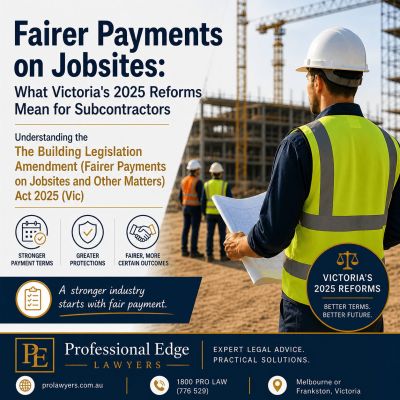

Getting paid on time has always been one of the biggest problems for subcontractors in Victoria’s building and construction industry….
Victoria’s building laws changed significantly on 1 July 2026. Learn what the new buyer protections, Home Warranty reforms and rectification orders mean for homeowners.

Thinking about taking someone to court in Victoria? This plain-English guide explains which court to use, how costs work, what alternative dispute resolution involves, and what to expect from civil litigation.
Discovering defects in your new home or renovation is stressful and expensive. Victorian law provides protections for home owners against defective building work.
When a debtor fails to pay, knowing the correct legal steps can mean the difference between recovering your money and writing off the debt entirely.