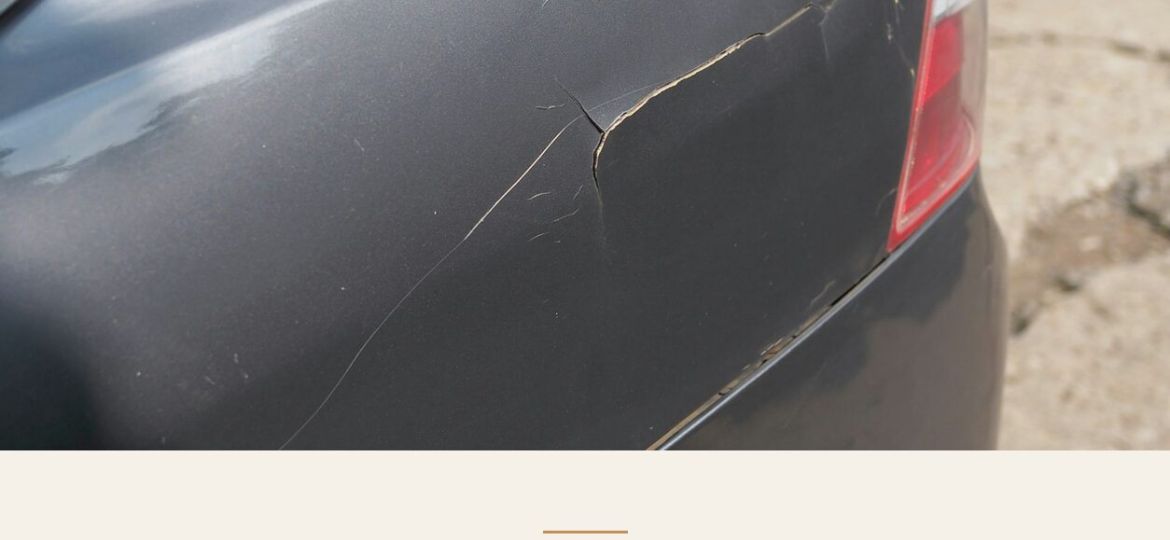
If another driver damaged your car and has not paid, a letter of demand is the usual first step. It sets out what happened, what you are claiming and the date by which you expect to be paid. This guide covers claims for damage to a car and related costs in Victoria. It does not cover injuries.
In short
- A letter of demand asks the driver at fault, or their insurer, to pay for the damage by a set date.
- You can claim the reasonable cost of repairs, your insurance excess, towing, and a hire car while your car was off the road.
- The Transport Accident Commission (TAC) does not pay for damage to vehicles.
- If the letter does not work, the Magistrates’ Court of Victoria hears civil disputes up to $100,000. Defended car accident claims are referred straight to arbitration.
- A claim for property damage caused by negligence generally has to be started within six years.
Want a lawyer to send the letter? See our Letter of Demand page or call 1800 776 529.
Who to write to
Who receives the letter depends on who is insured.
| Your situation | Who to write to | What usually happens |
|---|---|---|
| You have comprehensive insurance | Your own insurer first | Your insurer usually pays for the repairs and pursues the other driver. You may still be out of pocket for your excess, and sometimes towing or a hire car. |
| The other driver is insured | The driver, asking them to pass the letter to their insurer | Their insurer usually deals with the claim. It may ask for quotes and photos, and may dispute who was at fault. |
| The other driver is not insured | The driver personally | The claim is against the driver. The TAC does not pay for damage to vehicles. |
| The other car was a work vehicle | The driver, with a copy to the business that owns the vehicle | Who is responsible depends on the facts. |
Victoria Legal Aid suggests telling your insurer about the accident as soon as possible. If you are insured, speak to your insurer before sending your own demand, so the two claims do not overlap. Check your policy as well: some policies limit what you can say or settle without the insurer’s agreement.
What you can claim
- The reasonable cost of repairs. If the car is not worth repairing, the claim is for its value just before the crash, less what the damaged car is worth.
- Your insurance excess, if your insurer paid for the repairs.
- Towing, storage and assessment fees.
- The reasonable cost of a hire car while your car was off the road.
Injuries are dealt with separately. The TAC pays for treatment and support after a transport accident, but its own guidance says it cannot pay for damage or repairs to your car, or for towing or storage.
What to gather first
- The other driver’s name and address, the registration number, and the owner’s name and address. Drivers must exchange these details after a crash, even if nobody is hurt (Road Safety Act 1986 (Vic) s 61).
- The police event number, if police attended or the crash was reported.
- Photos of both cars and the scene, including road markings and signs.
- Names and contact details of witnesses, and any dashcam footage.
- Two repair quotes, or the repair invoice, and any assessor’s report.
- Receipts for towing, storage, a hire car and your excess.
What the letter should say
- The date, time and place of the crash.
- A short, factual account of how it happened and why the other driver was at fault.
- Both registration numbers, and any police event number.
- The amount claimed, item by item, with the quotes or invoices attached.
- A date for payment. Fourteen days from the date of the letter is common.
- A request that the driver pay, or pass the letter to their insurer and send you the claim number, and what you will do if neither happens.
Keep the letter to the facts. A letter of demand is a demand, not a court order, and its weight comes from the evidence behind it and from your being ready to take the next step. Our guide to letters of demand after a car accident goes through each part in more detail.
If the letter does not work
The next step is a claim in the Magistrates’ Court of Victoria, which hears civil disputes up to $100,000 (Magistrates’ Court Act 1989 (Vic) ss 3(1), 100(1)).
- You start by filing a complaint and serving it on the other driver.
- The other driver then has 21 days to file a notice of defence. If no defence is filed, you may apply for an order.
- If the claim is defended, the Court says that defended civil matters for car accidents are referred straight to arbitration.
There is a time limit. A claim for property damage caused by negligence generally has to be started within six years of the crash (Limitation of Actions Act 1958 (Vic) s 5(1)(a)). For the court process in general, see our guide to taking someone to court in Victoria.
How we can help
We send letters of demand for car damage claims across Victoria, and act in the Magistrates’ Court if the claim is not paid. Through our Letters of Demand service, a lawyer’s letter to the other driver is a fixed fee of $440 including GST. See letter of demand after a car accident, or our Letter of Demand page.
Call 1800 PRO LAW (776 529) or send an enquiry. We reply within one business day.
Written and reviewed by Radek Dajer, principal solicitor, Professional Edge Lawyers. Current at 13 November 2026.
This article is general information only. It is not legal advice about your situation, so obtain advice on your own circumstances before acting.
Need Legal Advice?
Practical advice from our Frankston office for clients across Melbourne and the Mornington Peninsula, in English or in Polish.
BOOK A CONSULTATION1800 776 529